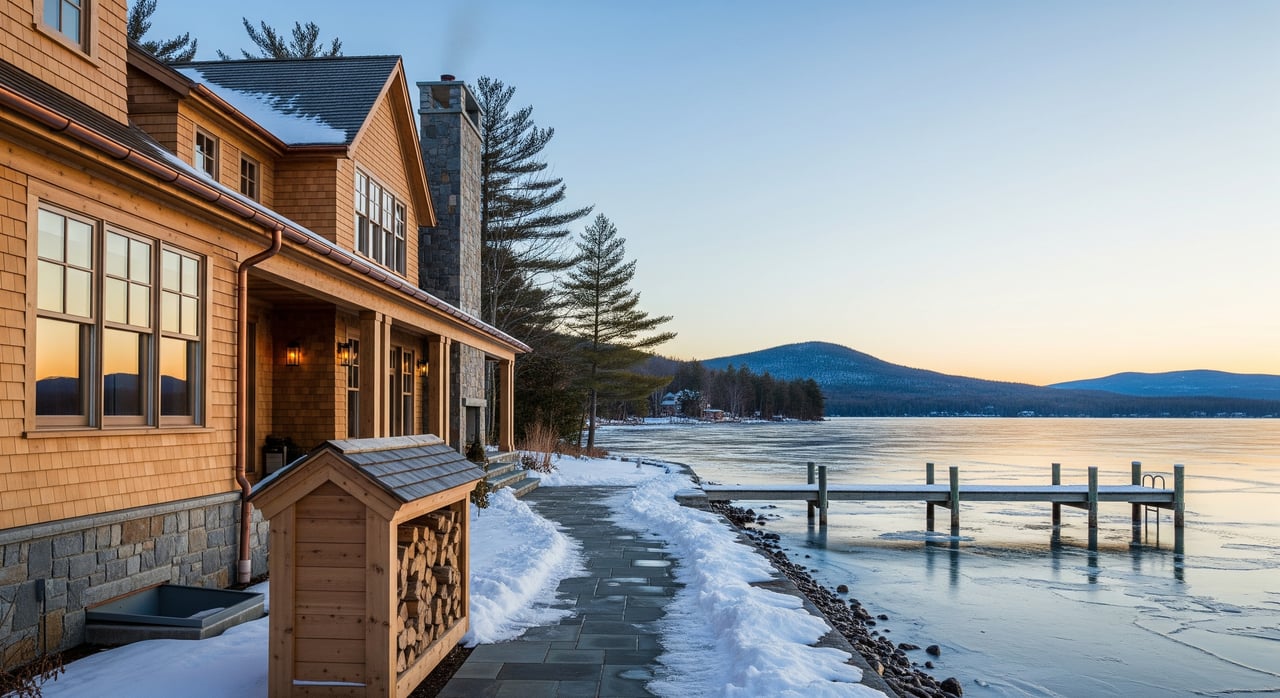
Closing up your lake place in Meredith for the season can feel like a race against the first hard freeze. You want to protect your pipes, your dock, and your peace of mind without overcomplicating the process. In this guide, you’ll get a clear, Lakes Region–specific plan that covers timing, system-by-system checklists, vendor coordination, and seller tips for a smooth spring reopening. Let’s dive in.
When to winterize in Meredith
Late October through November is when freezing weather settles into the Lakes Region. Many owners aim to finish winterization by mid-October to early November, before sustained subfreezing nights. Small, sheltered coves often freeze earlier than open water, so plan sooner if your shoreline is protected from wind. If an early cold snap is forecast, move your schedule up.
Check lake-specific practices with your marina, lake association, or the Town of Meredith. Confirm any dock or mooring rules and customary schedules. For date-specific planning, review local climate normals from NOAA for stations near Meredith.
Water and plumbing
Protecting your plumbing is priority one. Frozen pipes can burst and cause expensive damage, especially in second homes.
- Shut off the main water when the home will be vacant. Label all shutoffs for easy access.
- Drain domestic lines by opening faucets and flushing toilets. For full protection, have a licensed plumber perform a compressed air “blow-out.”
- Drain and winterize the water heater per the manufacturer. Hire a pro for gas or oil units.
- Add non-toxic RV/propylene glycol antifreeze to traps and drains if recommended by your plumber.
- Irrigation and outdoor spigots: drain and blow out lines, remove hoses, and store controllers.
- Well systems: involve a licensed well contractor if you plan to isolate or drain the pump. Follow NHDES guidance and never add antifreeze to a well.
If the home will be unheated
Turn off and drain all water. Leave faucet valves open. Toilets and valves can hold residual water that freezes, so consider professional winterization and RV antifreeze in bowls and traps.
If you will keep heat on
Set thermostats to a safe minimum, typically 50 to 60°F depending on pipe locations. Insulate exposed lines in crawlspaces, garages, and attics. Ask your plumber if any areas need heat tape.
Heat and energy
Your heating system must be reliable and efficient when you are away.
- Schedule a fall tune-up for your furnace or boiler. Replace filters and check safety controls.
- Have chimneys and fireplaces cleaned and inspected. Cap chimneys to keep out animals.
- Install or enable remote thermostat monitoring for alerts and quick adjustments.
- Seal drafts around doors, windows, and penetrations with weather-stripping and caulk.
- Check attic insulation and ventilation to lower heat loss and reduce ice-dam risk.
- Confirm fuel accounts and deliveries for oil or propane so tanks never run low.
Docks and boats
Ice and winter storms can damage docks and watercraft. Plan early with local pros.
- Follow your dock manufacturer’s guidance and lake association rules. Depending on your dock type and exposure, remove to shore, partially remove sections, or secure floating parts.
- Haul boats for dry storage if possible. Use marina or certified yard services for shrink-wrap, cradle storage, and engine winterization.
- Winterize engines by stabilizing fuel, fogging as required, and draining cooling systems. Remove or maintain batteries per marine guidance.
- Remove electronics, ladders, and lights that ice could damage. Verify mooring rules with local authorities if leaving hardware in place.
Local marinas and dock contractors in the Lakes Region book up quickly after Labor Day. Confirm dates and scope in writing.
Exterior and access
Winter conditions can stress your roof, siding, and access points.
- Clean gutters and downspouts and check roof flashing and shingles. Remove debris that traps moisture.
- Reduce ice dams with proper insulation and ventilation. Use professional installation for heat cables if needed.
- Trim trees and limbs that could fall on the roof, shoreline structures, or power lines.
- Drain and cover exterior faucets. Store hoses and irrigation equipment indoors.
- Test sump pumps and verify discharge lines stay clear of ice. Add battery backup if needed.
- Arrange insured snow removal for driveways and walkways. Clear access helps emergency services and potential off-season showings.
- Secure windows, doors, and outbuildings. Use timers for lights or consider a property watch service.
Wells, septic, and the environment
Shoreline properties require extra care for water quality and system safety.
- Have a licensed well contractor handle any pump isolation or winterization. Follow NHDES guidance and avoid chemicals in the well.
- Septic systems usually do not need special winterization if active. Avoid heavy vehicles over the leach field and consult a septic pro if the home will be vacant with water off.
- Dispose of oils, antifreeze, solvents, and batteries at approved hazardous-waste facilities under NHDES rules.
Interior close-up
A clean, dry interior resists pests and mold.
- Clean and empty the refrigerator if you unplug it, and leave doors ajar. If you keep it running for occasional use, set it to efficient levels.
- Turn off and drain whole-house humidifiers as appropriate. Clean standalone dehumidifiers.
- Remove perishables and trash. Consider scheduled checks to prevent odors.
- Unplug nonessential electronics and appliances. Keep monitoring devices powered and connected.
- Seal gaps and screen vents to limit rodent or bird access. Close interior doors to reduce drafts.
Vendor plan that works
A little coordination now prevents headaches later, especially in peak fall season.
- Engage licensed specialists: plumber, well contractor, HVAC technician, chimney sweep, marina and marine mechanic, dock contractor, electrician, snow removal, and property watch service.
- Book early. The Lakes Region sees a fall rush for haul-outs, blow-outs, and dock removal.
- Get a written scope with timing, proof of insurance, and who handles fluid and battery disposal.
- Provide secure access via a lockbox, gate codes, and a local contact if you are off-site.
- Request before-and-after photos and a short condition report for your records.
Insurance and vacancy
Many insurance policies include vacancy clauses that affect coverage. Notify your insurer if the home will be empty for an extended period. Ask about required safeguards such as regular inspections, maintained heat, or alarm systems. Keep receipts and service records in case you need to document proper care.
Simple Lakes Region timeline
- Late August to September: schedule vendors for docks, boats, plumbing blow-outs, and HVAC service. Order fuel.
- Early to mid-October: remove or secure docks and haul boats, especially in protected coves that freeze earlier.
- Mid-October to early November: complete full water and plumbing winterization, seal drafts, and finalize snow removal contracts.
- November: test sump pumps, set remote monitoring, and confirm fuel deliveries.
- Midwinter: arrange periodic property checks and clear heavy snow as needed.
- March to April: plan reopening, inspections, and dock reinstallation as ice-out conditions arrive.
Spring reopening for sellers
If you plan to sell in spring, a clean, documented opening builds buyer confidence.
- Have a plumber and licensed well contractor reactivate water systems. Sanitize the well as recommended and test function.
- Service HVAC and restore humidifiers and AC systems. Replace filters.
- Inspect the septic for winter damage and pump if due. Keep service records to share.
- Reinstall docks and stage the shoreline early. Many buyers ask about dock condition during first showings.
- Power wash siding and decking. Check for freeze-thaw damage to railings and boards.
- Refresh landscaping, remove debris, edge beds, and add mulch as needed.
- Deep clean interiors, test fixtures, and replace smoke and CO detector batteries.
- Complete safety and maintenance checks such as chimney, electrical, and well water testing. Organize reports for buyers.
- Create a winterization file with dates, vendors, photos, and receipts to show diligent care.
Common mistakes to avoid
- Waiting until after the first hard freeze to start winterization.
- Leaving the main water on during long vacancies.
- Skipping professional blow-outs or well contractor help for pump systems.
- Using the wrong antifreeze or mishandling fuels and batteries.
- Ignoring attic insulation and ventilation that prevent ice dams.
- Forgetting to confirm snow removal and emergency access.
Ready to protect and plan
A thoughtful winterization plan protects your Lakes Region home and sets you up for a strong spring. If selling is on your horizon, early prep and clear documentation can speed buyer decisions and support your price. When you are ready to talk strategy, pricing, and timing for your Meredith-area lake home, connect with Greg & Krystal Sherwin for local guidance and premium marketing.
FAQs
When should I winterize a lake home in Meredith?
- Aim to finish by mid-October to early November, earlier if an early cold snap is forecast or your cove freezes quickly.
What thermostat setting helps prevent frozen pipes?
- If you keep heat on, many pros recommend 50 to 60°F, adjusted for your home’s layout and pipe exposure.
Do I need RV antifreeze in toilets and traps?
- If the home is fully winterized and unheated, many owners use non-toxic RV/propylene glycol in traps and bowls as advised by a plumber.
How should I handle docks on Lake Winnipesaukee?
- Follow your dock type’s guidance and local lake association or town practices, removing or securing sections before ice forms.
Should I notify my insurer if the house is vacant?
- Yes. Many policies have vacancy clauses and may require regular checks, maintained heat, or alarm systems.
What should I do in spring before listing my lake home?
- Reactivate and test water and HVAC, reinstall the dock, complete inspections, deep clean, refresh landscaping, and organize a winterization file for buyers.