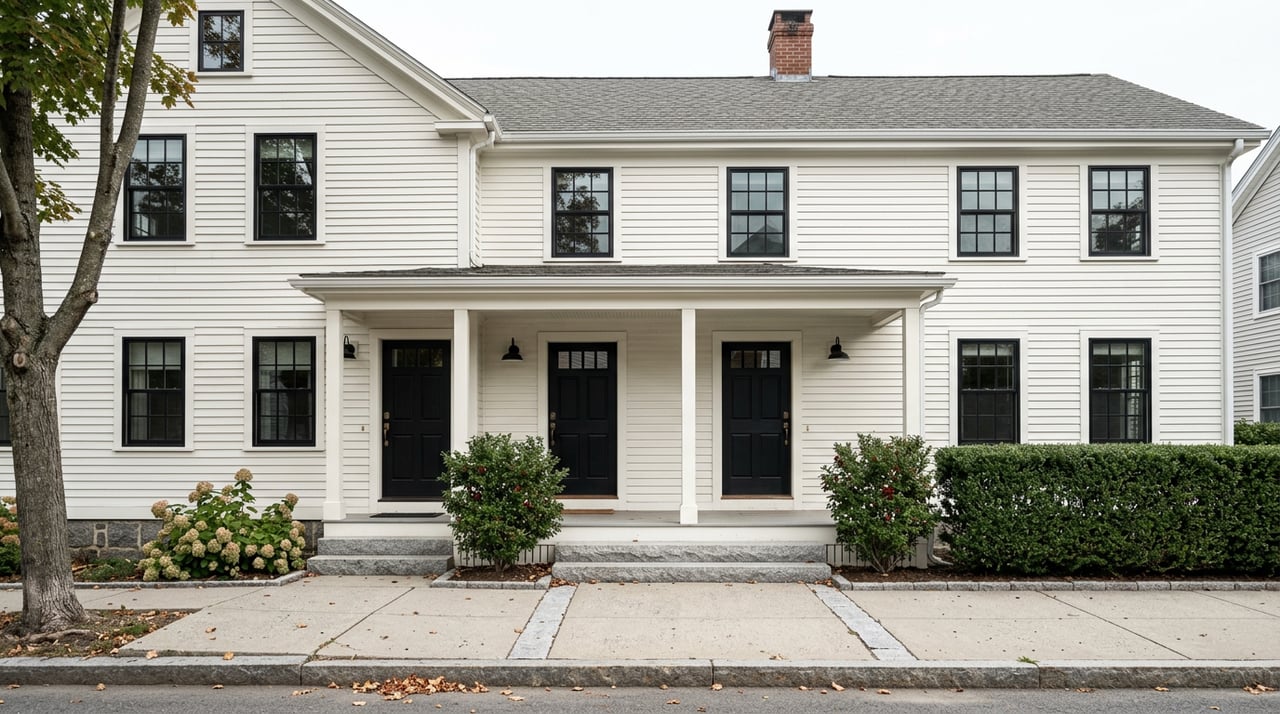
Thinking about buying a 2–4 unit in Concord, NH? You are not alone. Investors are drawn to steady tenant demand, classic New England building stock, and a jobs base that helps keep vacancy in check. In this guide, you will get clear numbers, a simple underwriting path, local rules to know, and a practical checklist you can use on your next tour. Let’s dive in.
Why Concord works for small multi-family
Concord’s estimated population was about 44,674 in 2024, and roughly 43% of households rent, according to city-level Census QuickFacts. The median gross rent reported in the 2019–2023 window was $1,360, which supports the case for rental housing supply in a compact capital city setting. You can review city-level population and tenure data in the official QuickFacts summary from the Census Bureau for added context. City QuickFacts confirm Concord’s size and renter mix.
Employment is another pillar. As New Hampshire’s capital, state government is a major employer, and health care is the city’s largest private sector. Concord Hospital Health System reported about 3,384 FTEs in FY2024, plus part time and per diem staff, which helps support steady rental demand across many unit types. You can read more about Concord’s profile and employer base on the city’s summary page.
The bottom line: Concord often suits buy-and-hold investors who value consistent occupancy and stable cash flow over purely speculative appreciation plays.
Current rents and pricing in context
Recent rental feeds point to average or median rents roughly in the $1,400 to $2,000 per month range across the city, depending on dataset and bedroom mix. Sources cited in recent reporting include Zillow, RentCafe, and Realtor.com. Expect variance by neighborhood, building condition, and unit size, and underwrite each unit based on local comps rather than a single citywide figure.
On pricing, many two- and three-family properties traded around $400,000 to $750,000 in 2024–2025. Larger 10-unit mixed-use or apartment buildings downtown can sell for more than $1 million, with pricing tied to commercial income, unit mix, and lot constraints. As you compare options, compute both price-per-unit and GRM, since these quick metrics help normalize deals when units differ in size or rent level.
Building types you will see
- Converted New Englander-style homes and triple-deckers split into 2–3 units, often with shared systems and older layouts.
- Purpose-built 2–3 unit buildings and small mixed-use properties with retail at grade and apartments above, especially near downtown.
- Small 4-unit structures and the occasional 8–12 unit block. In older downtown stock, parking and separate utilities are recurring underwriting questions.
Underwrite with Concord in mind
Start with conservative assumptions and pressure-test for taxes and turnover.
- Vacancy allowance: 5–8% in a stable market. Use 8–10% for older properties or higher expected turnover.
- Operating expenses: 35–50% of effective gross income for older small multi-family. Many investors use the 50% rule as a quick screen, then refine with actuals.
- Management: 8–10% of collected rent if you hire a third-party manager.
- Reserves: $250–$500 per unit per year for capital items. Older buildings usually need the higher figure.
- Property taxes: Model with care. Concord’s total 2025 rate was reported at $29.11 per $1,000 of assessed value. Always confirm the current year’s rate before you finalize numbers. See local coverage of the 2025 tax rate.
Sample quick screen
- Purchase price: $500,000
- Annual gross rent (market): $3,000 per month total equals $36,000 per year
- Vacancy 7% equals effective gross income of $33,480
- Operating expenses 40% equals $13,392, leaving NOI of $20,088
- Cap rate equals $20,088 divided by $500,000 equals 4.0%
Interpretation: A 4% unlevered cap rate is low for a value-add play in a smaller building. To hit target returns, you may need stronger leverage, clear rent upside, or a renovation plan that raises income. Always run sensitivity for plus or minus 10–20% in both rent and expenses to see how the deal behaves if taxes adjust, a unit turns, or insurance rises.
Financing paths to expect
- Owner-occupied buyers can often use FHA 1–4 unit financing or conventional 2–4 unit programs. FHA allows owner-occupied 2–4 unit purchases, subject to program rules and loan limits. For official guidance, review FHA materials and verify details with your lender.
- Non-owner-occupied investors often use DSCR or portfolio loans. These usually require higher down payments and DSCR-based underwriting.
Zoning, permits, and unit legality
Zoning sets what is allowed on each parcel. Some downtown and in-town districts permit small multi-family or mixed use, while more suburban or outlying zones are more restrictive. Before you make an offer, pull the parcel in the city’s map and confirm allowed uses and any special approvals.
- Check your zoning district with the city’s Zoning Map Book.
- Review parcel details with the Interactive GIS Viewer.
- Search permit history in the Citizen Self-Service Permits portal.
Always confirm that each unit is legally recognized. Unpermitted conversions can create costly surprises and disrupt income.
Local legal items that affect returns
- Security deposits: New Hampshire law sets limits and handling rules, including trust-holding, receipts, interest after a year, and return timing. Mishandling can lead to statutory damages. Review the statute on security deposits and obtain a full deposit ledger during due diligence.
- Evictions and notice periods: NH law sets specific timelines. A general 30-day notice applies to many terminations, while nonpayment or certain serious breaches can allow a 7-day notice. Timelines are court-driven in practice. Read the relevant notice rules.
- Lead paint and renovations: Most pre-1978 buildings fall under federal disclosure and EPA/HUD RRP rules. Plan for testing and lead-safe work practices on any paint-disturbing work. Learn the basics of RRP requirements.
- Certificates of occupancy and zoning compliance: Confirm that each unit has legal standing and that past work was permitted. Use the city’s permit portal and follow up with Planning and Code.
- Rent controls: New Hampshire does not have municipal rent control. Still, underwrite with realistic rent growth and tenant retention in mind.
A Concord-focused due diligence checklist
Use this as a quick reference before and after you go under contract.
Documents and financials
- Rent roll by unit, all leases, and security deposit ledger
- Last 12 months of utility bills and any service contracts
- Seller’s 3–5 years of operating statements and capex history
- Tax card, recent assessment, and current tax bill
- Insurance quotes and any claims history
Permits, zoning, and legal status
- Certificate of occupancy for each legal unit and permit history
- Zoning district and allowed uses; note any variances or special exceptions
- Any open code enforcement cases
Physical condition and environmental
- Full inspection with focus on roof, foundation, structure, electrical, plumbing, heating, water intrusion, and mold
- Lead paint and possible asbestos screening for pre-1978 buildings, and RRP plan for upcoming work
- Fuel oil tank search and any documentation on underground or above-ground tanks
- FEMA flood map review and any flood insurance requirement
Tenancy and operations
- Tenant payment history and any concessions
- Utility metering layout and who pays what
- Snow removal, trash, lawn care, and heating service contracts
How Concord compares nearby
- Nashua: Closer to Greater Boston and often shows higher rents and higher purchase prices than Concord. Yields can compress, but liquidity and appreciation potential may be stronger.
- Manchester: A larger inventory and more active investor base can create more pricing dispersion and competition. Some buyers find higher cap rates, with trade-offs in competition and asset condition.
Takeaway: Concord sits in the southern New Hampshire middle market. It pairs stable demand from state and health care employers with a range of small multi-family options, which suits long-hold investors who value consistency.
Your next steps
- Define your buy box and return targets. Set your desired cash-on-cash and risk tolerance.
- Pull zoning and permit history early. Use the city map tools before you tour.
- Run a quick screen on each lead. Calculate GRM, a conservative NOI, and a tax stress test.
- Inspect for systems and safety. Budget for lead-safe practices on pre-1978 buildings.
- Draft offers with clear contingencies. Include permit, rent roll, and environmental checks.
- Line up financing and management. Verify loan terms and who will handle leasing and maintenance.
If you want a hands-on partner to help you source, underwrite, and negotiate small multi-family in Concord, reach out to Greg & Krystal Sherwin. Our team combines neighborhood-level expertise with discreet investor representation and a community-first approach.
FAQs
What makes Concord attractive for 2–4 unit investing?
- A sizable renter base, steady government and health care employment, and classic small multi-family stock support consistent occupancy and long-term holds.
What are current rent ranges in Concord, NH?
- Recent datasets from Zillow, RentCafe, and Realtor.com point to roughly $1,400 to $2,000 per month citywide, with actual rents varying by unit size, location, and condition.
How do property taxes affect Concord underwriting?
- Concord’s reported 2025 rate was $29.11 per $1,000 of assessed value, so small changes in assessment can shift cash flow; always model taxes with the current year’s rate and a stress buffer.
What vacancy and expense ratios should I use?
- Many investors screen with 5–8% vacancy and a 35–50% operating expense ratio for older small multi-family, then refine with actual financials and utility splits.
Can I use FHA to buy a 3- or 4-unit in Concord?
- Yes, FHA allows owner-occupied 1–4 unit purchases subject to program rules and loan limits; review FHA guidance and confirm specifics with your lender.
What should I verify on zoning and unit legality?
- Confirm the zoning district and permitted uses, check permit history, and obtain certificates of occupancy; start with the city’s Zoning Map Book and permit portal.
What are New Hampshire’s rules on security deposits and evictions?
- NH law sets deposit limits and handling rules and requires a 30-day notice for many terminations, with a 7-day option for nonpayment or serious breaches; see deposits and notice periods.