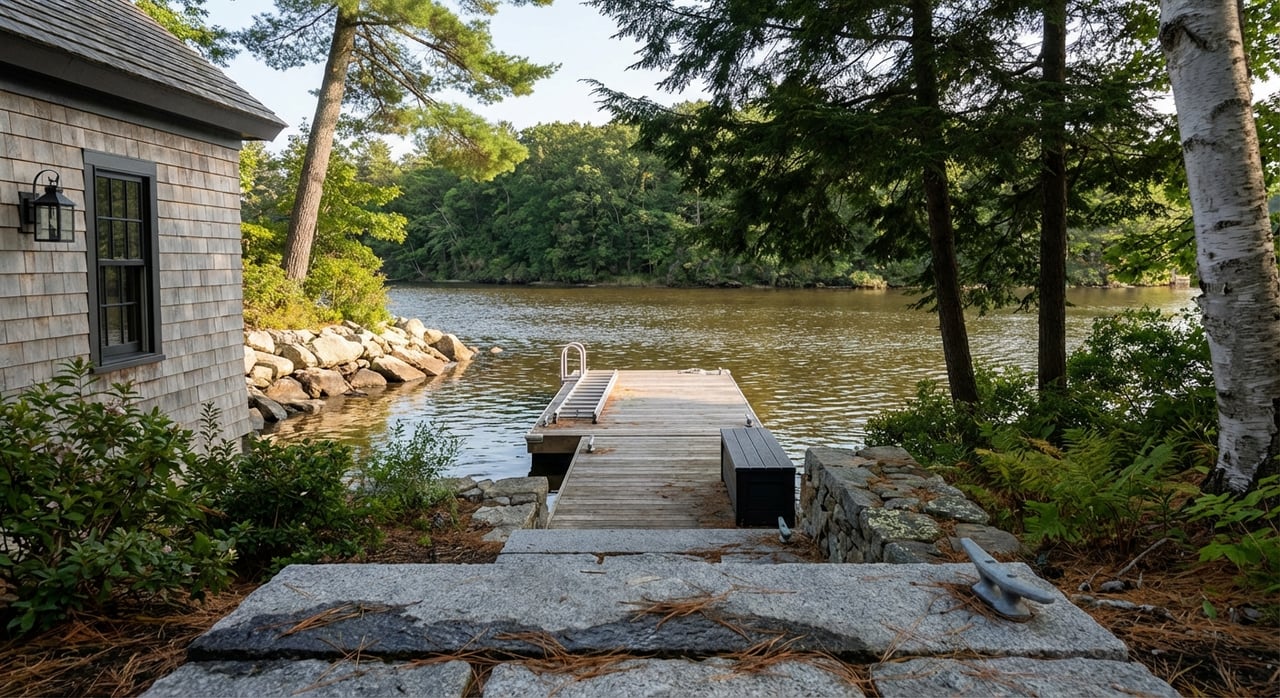
Picture your morning coffee on Lake Winnipesaukee, watching the water change with the light. If you are deciding between true waterfront and a home with deeded or association water access in Meredith, you are not alone. Each path offers a different mix of cost, convenience, and responsibilities. In this guide, you will learn the real differences, typical prices, permit rules, dock and mooring basics, and a step‑by‑step checklist so you can buy with confidence. Let’s dive in.
Waterfront vs. water-access: what they mean
True waterfront ownership
With true waterfront, your parcel includes direct shoreline frontage and littoral rights. In New Hampshire, courts recognize these rights under a “reasonable use” standard, which means you can enjoy and access the water but cannot unreasonably interfere with neighboring owners. You may have more control over a beach area and the ability to place a dock on your frontage, subject to permitting and footprint limits. For context on littoral disputes and the reasonable use standard, review this New Hampshire case example on correlative rights from the state’s Supreme Court.
Pros you might value:
- Direct, private shoreline and a shorter walk to the boat.
- Potential for deeper water at the dock and better privacy.
- Generally higher long‑term value compared to inland property.
Tradeoffs to plan for:
- Stricter permitting and maintenance for docks and shoreline structures.
- Potential dock location and use constraints due to neighbor rights.
- Higher insurance, taxes, and upkeep.
Water-access rights
Water-access homes sit off the shore but come with a recorded right to use a beach, dock, or mooring through an easement or association. Rights are created and limited by deeds, subdivision covenants, condo declarations, or HOA bylaws. These are not the same as owning the shoreline, and they often include rules on who can use facilities, guest policies, and how slips or moorings are assigned.
Pros you might value:
- Lower purchase price than comparable direct-frontage properties.
- Shared amenities that deliver much of the lake lifestyle.
- Often simpler maintenance than owning the shoreline.
Tradeoffs to plan for:
- Possible waitlists or lotteries for slips and moorings.
- Annual association fees and rules that govern use.
- Less privacy than a private shoreline.
Price reality in Meredith and Winnipesaukee
Waterfront on Lake Winnipesaukee commands a premium. Recent Lakes Region reporting places the lake’s waterfront median in the multi‑million dollar range, with 2024–2025 sales around the 2.5 to 2.75 million mark for waterfront on Winnipesaukee. Individual sales vary widely by frontage, view, dockage, and specific location across the lake’s micro‑markets. You can see an overview of recent lakefront trends in the region from the Laconia Daily Sun’s market summary on Winnipesaukee waterfront sales.
Water-access homes and condos often trade from the mid‑hundreds of thousands into the low‑millions, depending on size, condition, location, and whether a slip is deeded. A deeded slip often adds meaningful value compared to an annually assigned or lottery slip. Bottom line: waterfront usually costs a multiple of inland options, while water‑access can be a smart value play if the rights are strong and well documented.
Docks, slips, and moorings: what to verify
Dock types and permits
Docks can be seasonal floating, fixed or pile-supported, or crib-style permanent structures. New Hampshire rules treat seasonal and permanent structures differently, and larger docks can trigger a fuller wetlands permitting review. Before you offer, identify the exact dock type, confirm whether it is seasonal or permanent, and ask for state and local permit history. If the dock is described as “grandfathered,” confirm what that means for repairs or replacements, since expansions usually require new approvals.
Moorings and municipal rules
Boat slips and moorings are separate rights. Moorings are typically administered by a harbor authority or state office with permits that follow annual cycles and strict transfer rules. The New Hampshire Division of Ports and Harbors explains mooring programs, permits, and waitlists statewide; review their guidance on mooring rules and program details. In Meredith, town docks and launches operate with posted limits, including a 3‑hour docking limit and no overnight docking. Check current launch and parking procedures, including resident facility stickers and seasonal enforcement, through the town’s page on boat launch and municipal parking information.
Marinas and storage
If private dockage is not available, many owners rely on local marinas for slips, valet service, or winter storage. Availability is limited and often waitlisted. Review pricing, waitlists, and rules with area operators, such as the services outlined by Meredith Marina.
Seasonal, septic, and lake health
Winter use and maintenance
Winnipesaukee and nearby lakes see significant ice. Many docks are designed to be removed each winter, while permanent structures and aeration systems require careful planning and can involve added risk. Clarify the winterization plan, removal schedule, and any special equipment you will need for safe off-season care.
NHDES Site Assessment for waterfront property
For developed waterfront property, New Hampshire requires a Site Assessment Study prior to executing a purchase and sale agreement. The seller must use a permitted designer, and buyers sign to acknowledge receipt at closing. Review the study closely, including sketches and any attached approvals for the onsite sewage disposal system. You can read the relevant state rules in the Env‑Wq 1000 series on the State of New Hampshire website.
Lake health and invasive species
New Hampshire monitors and educates boaters on invasive species. Programs like NH LAKES’ Lake Host promote Clean‑Drain‑Dry practices at ramps and marinas to keep lakes healthy. If you or your guests boat on multiple lakes, plan for extra diligence at launch and retrieval. Learn more about local lake stewardship efforts from NH LAKES and the Lake Host program.
Insurance and waterfront structures
Waterfront homes often require higher insurance budgets and special riders for docks, lifts, and waterfront structures. Ice, wind, boat impacts, and seasonal vacancy can affect underwriting. Get quotes early and confirm what is covered, including replacement costs for dock components.
Your due‑diligence checklist
Use this list to streamline offers and protect value:
Deed and legal description. Confirm whether the parcel owns shoreline or only has an access easement. If the listing claims a deeded beach or slip, locate the recorded instrument in the registry of deeds.
Recent survey. Look for lot lines, the reference line or high‑water mark, measured shoreline frontage, and any rights‑of‑way.
NHDES Site Assessment (waterfront). Obtain the Site Assessment Study for developed waterfront parcels and review attached system approvals. See state rule details in the Env‑Wq 1000 series.
Dock and shoreline permits. Request state wetlands permits or Permit‑by‑Notification records, plus local building and zoning permits. Confirm whether any rebuilds changed the footprint.
Mooring documentation. If a mooring is claimed, get the permit number and written confirmation on transferability or waitlist status from the harbormaster or Ports and Harbors. Read statewide program guidance from the Division of Ports and Harbors.
Association documents. For water‑access or HOA communities, review CC&Rs, bylaws, budgets, meeting minutes, reserve studies, and rules on slip allocation, guest use, and special assessments.
Title and exceptions. Identify recorded easements, rights‑of‑way, public access points, or conservation restrictions that could affect use.
Insurance and flood info. Get quotes that include dock riders. Check flood maps and ask about recent water or dock claims.
Physical walk‑through. Check dock condition, water depth at the dock end, lakebed composition, wind and wave exposure, stairs and retaining walls, and parking logistics. Confirm local launch and parking rules through Meredith’s municipal boat launch page.
Disputes or enforcement. Ask about any notices of violation, pending enforcement, or neighbor disputes, especially around dock placement. Littoral disagreements are a known litigation risk, as reflected in state case law examples.
Common pitfalls to avoid
- Relying on a “private dock/slip included” claim without recorded deed evidence or a transferable mooring permit.
- Assuming a grandfathered dock can be expanded or relocated without new permits.
- Skipping the NHDES Site Assessment on developed waterfront parcels.
- Overlooking HOA minutes that reveal slip allocation disputes or pending assessments.
- Planning a year‑round conversion without confirming septic capacity and shoreland constraints.
Which lifestyle fits you?
Choose waterfront if you want the shortest path to the water, maximum privacy, and the strongest long‑term value, and you are ready for added costs and permitting. Choose water‑access if budget, simplicity, and community amenities matter more than sole control of the shoreline. In Meredith, both options can deliver the Winnipesaukee lifestyle; the right choice comes down to how you plan to boat, entertain, and maintain the property.
Ready to compare options or vet a specific property’s permits and association rules? Let’s start with a focused plan tailored to your goals. Reach out to Greg & Krystal Sherwin for local guidance on Meredith and the Lakes Region, plus a thoughtful, high‑touch process that puts your needs first.
FAQs
What is the difference between waterfront ownership and deeded water access in Meredith?
- Waterfront includes direct shoreline ownership and littoral rights, while water‑access is an easement or association right to use shared facilities and does not include owning the shore.
How much do Winnipesaukee waterfront homes cost compared to water‑access properties?
- Recent reporting shows waterfront medians in the multi‑million range on Winnipesaukee, while water‑access homes often range from mid‑hundreds of thousands into low‑millions depending on rights and condition.
Do mooring permits transfer when I buy a Meredith home with a claimed mooring?
- Not always; many programs are non‑transferable or waitlisted, so get the permit number and written confirmation from the harbormaster or Ports and Harbors.
What permits should I request for an existing dock on Lake Winnipesaukee?
- Ask for state wetlands permits or Permit‑by‑Notification records, local permits, and any documentation on whether the dock is seasonal, permanent, or grandfathered.
What is the NHDES Site Assessment Study and when is it required?
- For developed waterfront property, the seller must provide a Site Assessment Study before executing a purchase and sale agreement, and buyers acknowledge receipt at closing.
Where can I launch or park in Meredith if I do not have private dockage?
- Review town docks, launch sites, time limits, and resident sticker rules on Meredith’s boat launch and municipal parking information page.